
Fillings
Tooth Fillings in Edison, NJ
Tooth-colored composite, usually in a single visit. We don't place silver fillings, and every filling we do is matched to the tooth it goes in.
- Tooth-colored composite only
- Usually a single visit
- No silver amalgam
- A quote before we start
What a filling does
Decay is bacteria dissolving the tooth from the outside in. It doesn't stop on its own and it doesn't grow back. A filling removes the decayed part and rebuilds what it took, which stops the process and restores the shape you chew with.
Every filling we place is composite: a tooth-colored resin bonded into the space. It's matched to the shade of the tooth around it, which for most people is the point, but the reason we use it is that it bonds to the tooth rather than merely sitting in it, so less healthy tooth has to be removed to hold it in place.
The three things people ask
Fillings are the most ordinary thing that happens at a dental practice, which doesn't stop them being the appointment people put off.
- It doesn't have to hurt yet
- Decay is painless until it reaches the nerve, and a tooth that has started to ache has usually been decaying for a while. Waiting for pain as a signal to book means arriving when a filling is no longer the answer.
- How long a filling lasts
- Years, usually, though nobody can promise a number. Size matters most: a small filling in a tooth that's otherwise sound will outlast a large one carrying the weight of a chewing surface. So does grinding, and so does what happens at the edges, which is where new decay starts.
- When a filling isn't the answer
- When the filling would end up wider than the tooth around it, there isn't enough tooth left to rely on, and a crown is the more honest recommendation. We'll tell you when that line has been crossed, and show you on the X-ray why.
How it goes
One visit for most fillings, start to finish.
Finding it
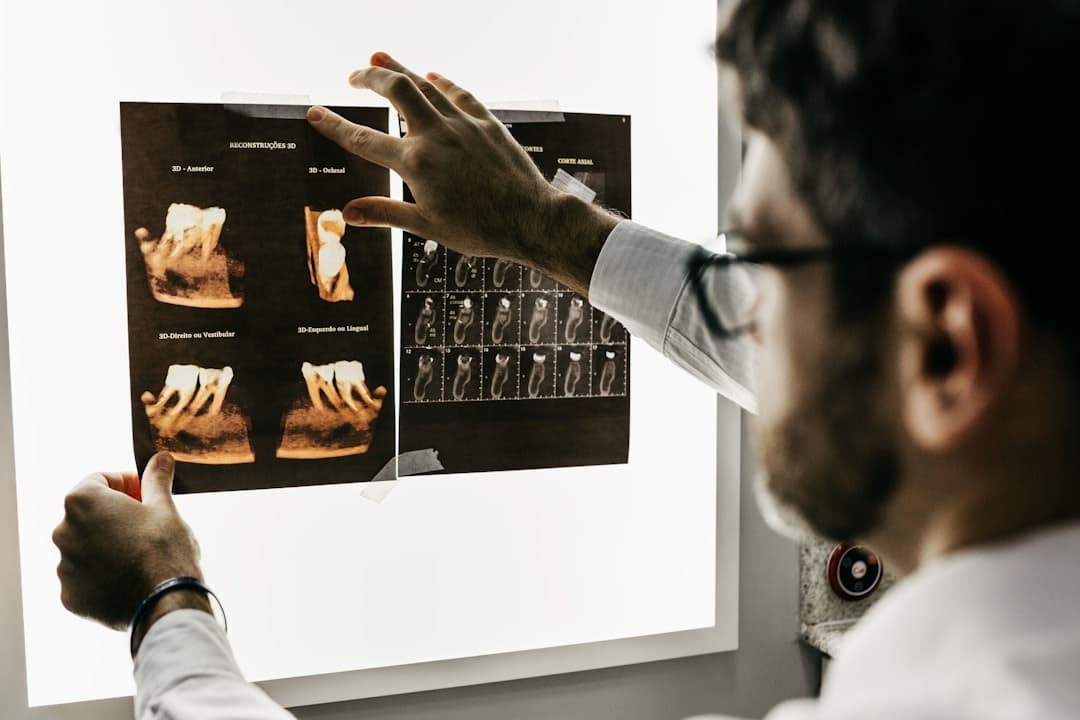
Some decay is visible. Much of it sits between two teeth where nothing shows, which is what the X-rays at a checkup are for.
Numbing, then removing the decay
The tooth is numbed first. What comes out is the decayed tooth structure and nothing more. The aim is to keep every part of the tooth that's still sound.
Placing and shaping the composite
The resin goes in, gets shaped to the contour of the tooth, and is hardened with a light. Shaping is what decides whether the tooth feels like yours afterwards, so it's worth the extra minutes.
Checking the bite
You bite on marking paper and we adjust until it sits level. A filling left a fraction high is the single most common reason a tooth aches afterwards, and it takes thirty seconds to fix.
Does getting a filling hurt?
The tooth is numbed, so the appointment itself is pressure and noise. The numbness wears off over a couple of hours, and it's worth not chewing on that side until it has, because a numb lip is remarkably easy to bite.
Some sensitivity to cold for a few days afterwards is normal, especially on a deeper filling. What's not normal is a tooth that feels tall when you close your teeth together, or sensitivity that's getting worse after a week. Both are quick to fix, and both are worth a phone call rather than waiting it out.
What a filling costs
Fillings are classed as a basic service, which most plans cover at a higher share than crowns or dentures. What you pay still depends on your plan and your deductible, and on how many surfaces of the tooth are involved.
We verify your benefits before the appointment and quote the work before we start it. If several teeth need attention, we'll tell you which ones are urgent and which can wait, rather than presenting the whole list as though it were one decision.
Filling (1 surface, composite)
Tooth-colored filling to repair a cavity.
See the insurance we accept, or call (732) 985-1120 and we will verify your benefits before you come in.

Reviewed by
Dr. Michael Lesnianski, DDS
Doctor of Dental Surgery, New York University College of Dentistry, graduated with Clinical Honors; residency at Woodhull Medical Center, Brooklyn.
Last reviewed
“Dr. Michael is extremely patient. He continuously made sure I was comfortable and had no pain. He is very nice and genuinely cares. He explains what he is doing, and continuously checks in with you throughout the procedure.”
Do you use silver fillings?
No. Every filling we place is tooth-colored composite. Beyond the appearance, composite bonds to the tooth, which means less healthy tooth structure has to be removed to hold the filling in place than an amalgam filling would require.
Should I replace my old silver fillings?
Not simply because they're silver. An amalgam filling that's intact, sealed and not causing trouble is doing its job, and replacing it means removing more tooth. The reasons to replace one are real: decay underneath it, a crack in the filling or the tooth around it, or a filling that has started to leak at the edges. We'll tell you which of those applies, and if none does, we'll tell you that too.
Do I need a filling if the tooth doesn't hurt?
Usually yes, and that's the point of catching it early. Decay is painless until it gets close to the nerve, so a cavity found on an X-ray while it's still small is a filling. The same cavity found a year later, once it hurts, is often a root canal and a crown instead.
My tooth is sensitive after a filling. Is that normal?
For a few days, yes, particularly to cold and particularly on a deeper filling. Call us if it's getting worse rather than better after a week, or if the tooth feels tall when you bite down. A filling sitting a fraction high is the commonest cause of a tooth that aches after treatment, and adjusting it takes seconds.
How long does a filling take?
One appointment for most fillings, including the numbing, and longer if several teeth are being done at once. Composite is placed and hardened in the chair, so there's no laboratory stage and nothing to come back for.
Where to find us
Edison Dental Studio is at 96 Plainfield Ave, Edison, NJ 08817. The practice has cared for families in Edison for more than 50 years. You can reach us at (732) 985-1120.
- Monday
- 9 AM – 5 PM
- Tuesday
- 9 AM – 5 PM
- Wednesday
- 9 AM – 5 PM
- Thursday
- Closed
- Friday
- 9 AM – 5 PM
- Saturday
- 8 AM – 1 PM
- Sunday
- Closed
Part of our general dentistry care.
Fillings in Edison, NJ
Something catching your floss, or a shadow someone mentioned at your last checkup? Come in and we'll look at it properly.